
May 12, 2026
SWIRC’s Alex Vernon Explains
In public conversations and news reports, the terms “refugee” and “asylum seeker” are often used to mean the same thing. However, in the realm of United States immigration law, they represent two very distinct legal pathways.
At the Southwest Detroit Immigrant and Refugee Center (SWIRC), we believe that providing clarity on these legal terms is a vital part of supporting and advocating for our community. Our Legal Director, Alex Vernon, recently sat down to explain exactly what separates these two statuses.
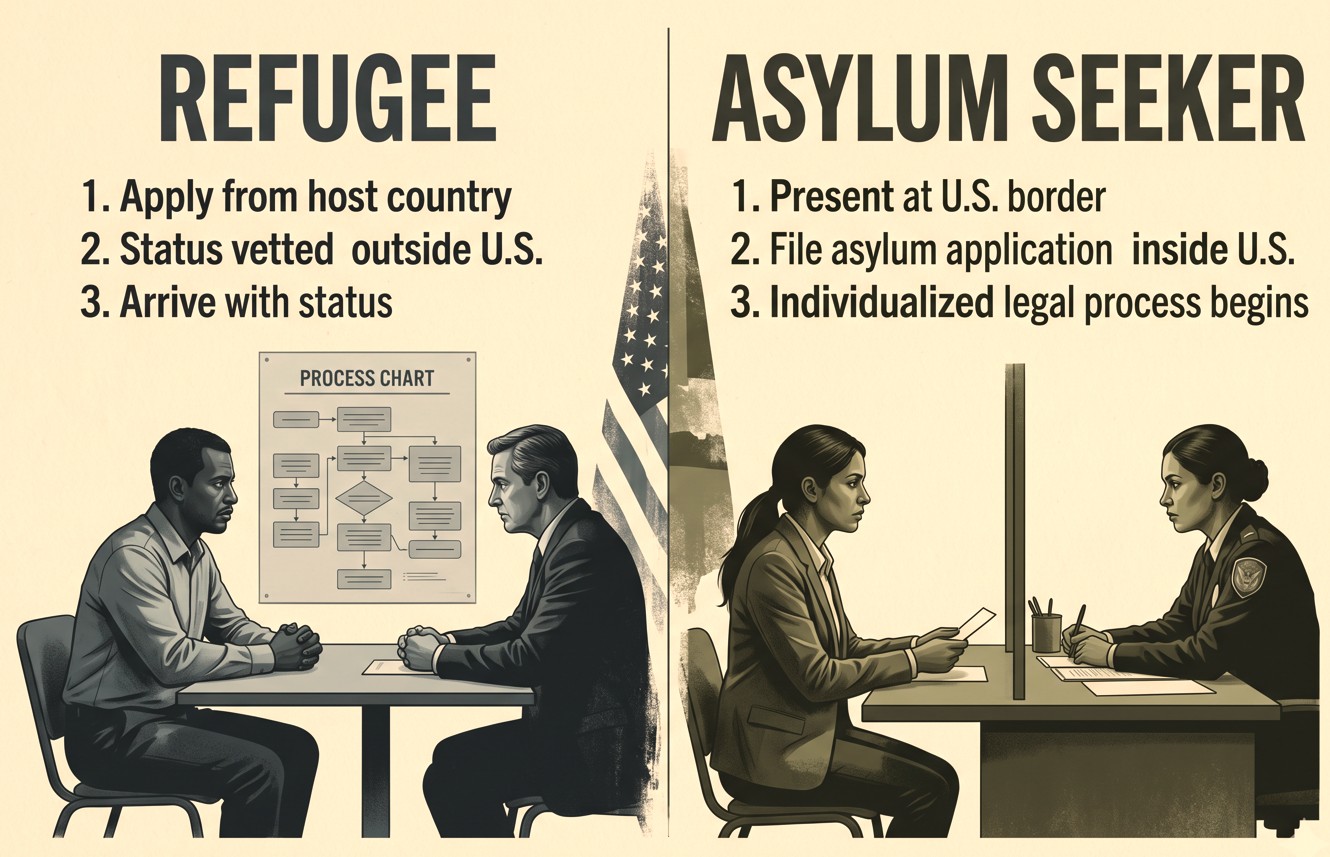
Ultimately, the difference comes down to a matter of timing and location: when and where does the legal vetting process begin?
The Refugee Pathway: Status Before Entry
The defining characteristic of a refugee is that their legal status is determined before they ever arrive in the United States.
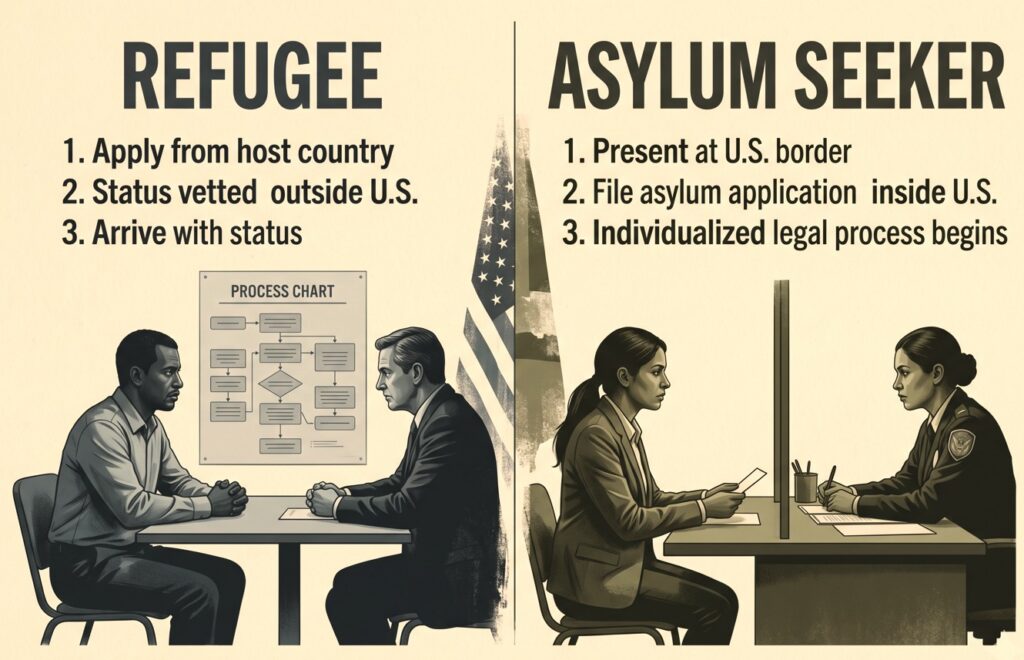
A refugee is an individual who is outside of their country of origin and has a well-founded fear of persecution based on race, religion, nationality, political opinion, or membership in a particular social group. They typically apply for protection from a host country, often while living in a refugee camp. The United States government conducts its extensive vetting and selection process entirely overseas.
When a refugee finally travels to the U.S., they are officially admitted as a refugee. They arrive with their legal status already established.
The Asylum Seeker Pathway: Process After Entry
An asylum seeker is pursuing the exact same legal protection as a refugee, but their geographic starting point is different.
An asylum seeker is someone who is already physically present in the United States or has arrived at a U.S. port of entry. Their legal process begins only after they arrive. To gain protection, they must proactively claim asylum and prove that they meet the criteria for a well-founded fear of persecution.
Because they are already inside the borders, their vetting and legal determination happen after entry. They pursue this status either affirmatively by applying through the immigration office or defensively while in immigration court.
Why This Distinction Matters
Understanding the difference between a refugee and an asylum seeker is more than just a matter of legal vocabulary. It shapes how our legal system processes their claims and how organizations like ours structure legal aid. While their journeys intersect the U.S. legal system at different points, both groups are navigating incredibly complex systems in search of safety.
Watch the Full Explanation
Listen to SWIRC Legal Director Alex Vernon explain these legal pathways in his own words:
We’re Here to Help Navigating the U.S. immigration system can be overwhelming. If you or someone you know is seeking asylum or needs guidance on their immigration status, the legal team at SWIRC is here to provide high-quality, accessible representation.
